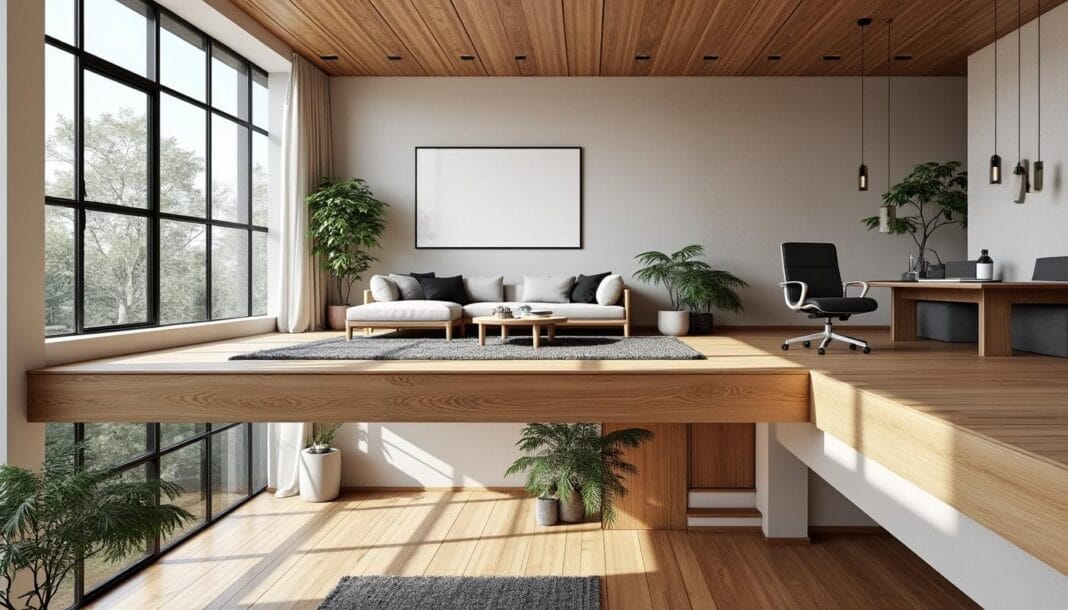
Optimisez votre intérieur avec une mezzanine adaptée à une hauteur sous plafond de 3m50. Cet aménagement ingénieux permet de gagner de la surface habitable sans empiéter sur votre espace au sol, particulièrement dans les logements modernes et les petits volumes. Avec une hauteur de plafond généreuse comme 3,50 mètres, créer une mezzanine devient une option séduisante pour y installer une chambre, un bureau ou un coin détente. Mais au-delà de la simple idée, réussir ce projet nécessite une bonne préparation, un respect des normes de sécurité et un choix judicieux des matériaux.
En misant sur une mezzanine à 3,50 mètres, vous bénéficiez d’une marge concrète pour aménager deux niveaux confortables. Cette hauteur permet de circuler aisément, d’adapter l’espace aux usages variés de votre famille et de conjuguer esthétisme et fonctionnalité. On explore ici l’ensemble des clés indispensables pour concevoir et installer une mezzanine optimisée, en tenant compte des contraintes normatives, du choix des accès, des matériaux, et des possibilités d’aménagement au sol et sur la plateforme. Découvrez aussi comment maximiser la luminosité, garantir la sécurité et valoriser votre bien grâce à cette solution d’aménagement vertical facile à personnaliser.
Les critères essentiels pour aménager une mezzanine sous une hauteur sous plafond de 3m50
Aménager une mezzanine avec une hauteur sous plafond de 3,50 mètres est un équilibre subtil entre confort, sécurité et esthétique. Cette hauteur permet de créer un espace mezzanine exploitable, mais le projet doit respecter certaines règles de base afin d’éviter une sensation d’écrasement ou une mauvaise ergonomie.
Il est primordial de comprendre que, pour que la mezzanine soit agréable à vivre, il faut nécessairement :
- Un dégagement suffisant en hauteur sous la mezzanine pour circuler sans se baisser, idéalement autour de 2,20 mètre.
- Une hauteur minimale sur la mezzanine pour que cet espace soit fonctionnel ; on recommande 1,80 à 2 mètres pour permettre aux occupants de s’y tenir debout.
- Une épaisseur de plancher optimisée pour maximiser les hauteurs utiles, en privilégiant des matériaux légers, comme le bois lamellé ou les structures métalliques fines.
Par exemple, avec une hauteur totale de 3,50 m, on peut facilement configurer une mezzanine de 2 m de hauteur, avec environ 1,50 m en dessous. Cela autorise des usages variés mais impose de bien penser la disposition pour éviter de sacrifier le confort.
Les logements dotés d’un plafond à cette hauteur gagnent donc un second niveau sans travaux lourds d’agrandissement, ce qui est très apprécié en milieu urbain où l’espace est restreint.
| Éléments | Hauteur recommandée | Commentaires |
|---|---|---|
| Hauteur sous plafond totale | 3,50 m | Permet un double niveau confortable |
| Hauteur sous mezzanine | 2,20 m minimum | Pour circuler aisément et aménager un salon, bureau ou cuisine |
| Hauteur sur mezzanine | 1,80 à 2 m | Pour un espace de vie fonctionnel et agréable |
| Épaisseur plancher | 20 à 30 cm | Impacte les hauteurs utiles |
Si l’espace sous la mezzanine est trop bas, vous aurez une sensation de confinement qui contrecarre l’objectif d’optimisation. Ces paramètres varient légèrement selon l’usage : chambre, bureau ou espace de rangement.
La réglementation et les obligations de sécurité pour une mezzanine à 3,50 mètres
Respecter les normes est fondamental pour garantir la sécurité et la pérennité de votre mezzanine.
Selon la réglementation française, la mezzanine doit offrir au minimum 1,80 m de hauteur pour être considérée comme un espace habitable. Avec 3,50 m sous plafond, cette exigence est largement atteinte, ce qui laisse de la marge pour concevoir une mezzanine confortable et pratique.
Voici les principales normes à respecter :
- Garde-corps obligatoire avec une hauteur minimale de 1 mètre pour empêcher les chutes.
- Espacement des barreaux des garde-corps limité à 11 cm maximum, notamment pour la sécurité des enfants.
- Escaliers ou échelles d’accès sécurisés avec une pente ne dépassant pas 45° pour les escaliers.
- Matériaux résistants pour la structure, capables de supporter au minimum 150 kg par m².
Pour les familles avec enfants, installer des barrières additionnelles et des revêtements antidérapants sur le sol de la mezzanine est fortement recommandé.
Il est vivement conseillé de faire appel à un professionnel dès la conception, afin de vérifier la conformité à la réglementation et d’assurer une installation sécurisée et pérenne.
| Norme | Exigence spécifique | Objectif |
|---|---|---|
| Hauteur minimale | 1,80 m habitable | Confort des occupants |
| Garde-corps | 1 mètre minimum de hauteur | Sécurité anti-chute |
| Espacement barreaux | Maximum 11 cm | Sécurité enfants |
| Pente escalier | Maximum 45° | Faciliter l’accès en toute sécurité |
| Charge supportée | 150 kg/m² minimum | Solidité structurelle |
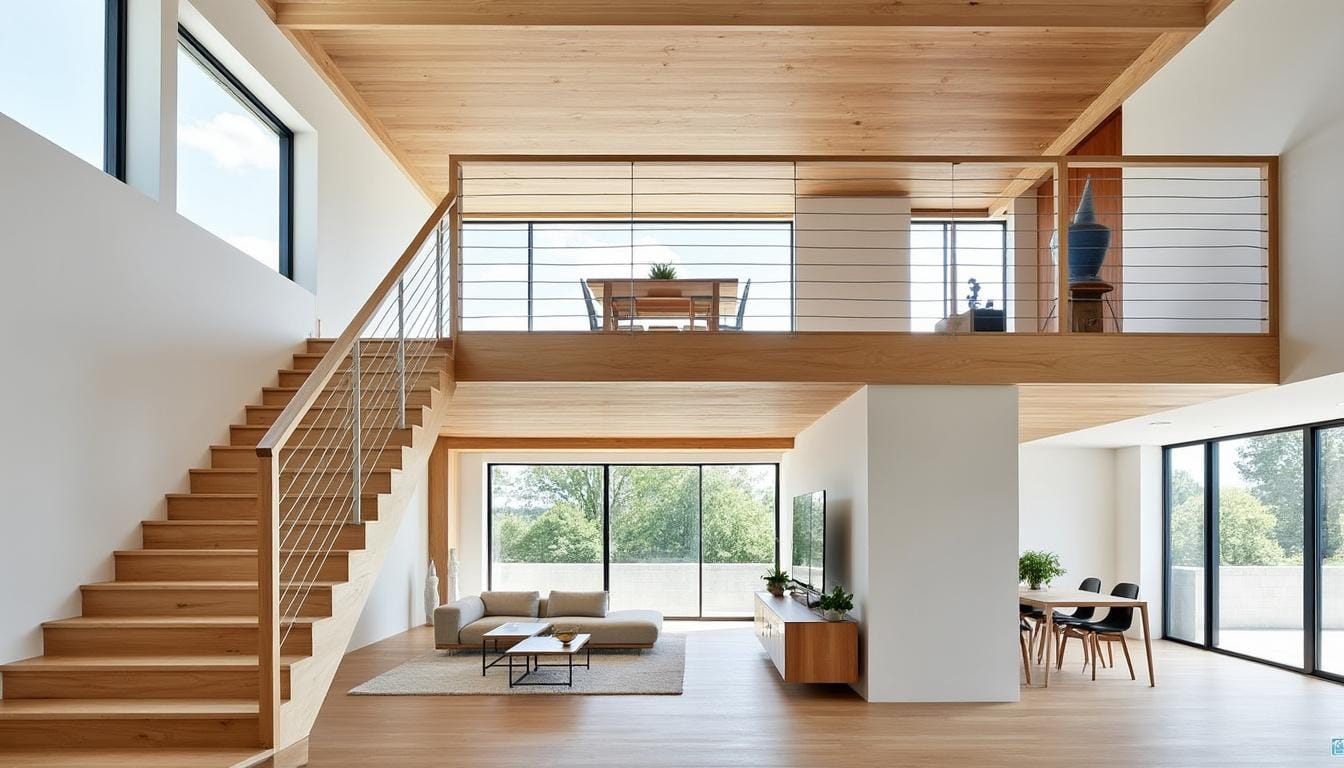
Les avantages concrets d’une mezzanine sous une hauteur sous plafond de 3,50 mètres
La mezzanine ne se contente pas de créer un étage supplémentaire, elle transforme radicalement votre espace de vie.
Voici les principaux bénéfices que j’ai pu expérimenter en aménageant avec soin une mezzanine dans des logements bénéficiant de cette hauteur généreuse :
- Un gain de surface vraiment significatif sans agrandir l’emprise au sol. Idéal pour un appartement type loft ou un studio où chaque mètre carré compte.
- Une séparation naturelle des espaces dans un volume ouvert, offrant intimité et fonctionnalité tout en conservant une belle luminosité.
- Amélioration de la circulation de la lumière et de l’air, la mezzanine en hauteur ne bloque pas la lumière et favorise un air ambiant plus sain.
- Polyvalence des usages : chambre, bureau, coin lecture, salle de jeux ou même coin yoga peuvent coexister dans ce volume optimisé.
- Valorisation notable du bien immobilier : un intérieur avec mezzanine bien pensée est plus attractif sur le marché, notamment auprès des jeunes actifs cherchant un espace personnalisé.
En créant une mezzanine chez vous, vous tirez profit de cet atout architectural majeur qu’est la belle hauteur sous plafond pour maximiser la qualité et la fonctionnalité de votre logement.
| Avantage | Impact | Exemple concret |
|---|---|---|
| Gain de surface | +30% à 50% d’espace habitable | Création d’une chambre à coucher au-dessus d’un salon |
| Séparation des espaces | Intimité sans cloison | Coin bureau sous la mezzanine et coin détente au-dessus |
| Lumière et ventilation | Meilleure circulation de la lumière naturelle | Fenêtre haute éclairant les deux niveaux |
| Polyvalence d’usages | Espaces multifonctionnels | Bibliothèque mezzanine avec espace jeux en dessous |
| Valorisation immobilière | Augmentation de la valeur du logement | Mezzanine design dans un appartement en centre-ville |
Exemple d’aménagement réalisé avec succès
Lors d’un récent projet avec un client qui possédait un salon avec une hauteur sous plafond de 3,50 mètre, nous avons aménagé une mezzanine destinée à un bureau. L’espace au sol sous la mezzanine est resté libre pour un coin détente. Le choix du bois clair, composé de matériaux écologiques achetés chez Leroy Merlin et des garde-corps en métal a permis de conserver un esthétisme contemporain et chaleureux. Le client a ainsi obtenu un environnement de travail lumineux et séparé qui valorise son intérieur.
Différentes options d’aménagement adaptées à une mezzanine de 3m50
Avec 3,50 m sous plafond, les possibilités d’aménagement sont vastes et personnalisables en fonction de votre mode de vie :
- Chambre en mezzanine : un coin nuit cosy avec lit queen-size, rangements encastrés et éclairage tamisé.
- Bureau en hauteur : un espace de travail optimisé, silencieux, équipé d’un bureau ergonomique et de prises multiples.
- Espace détente ou bibliothèque : un lieu pour lire, méditer ou se relaxer avec fauteuils confortables et étagères sur mesure.
- Zone de rangement supplémentaire : idéale pour stocker objets ou vêtements, en utilisant des solutions modulables et gain de place.
- Coin jeu pour enfants : espace sécurisé et aménagé pour encourager la créativité et le jeu dans un cadre protégé.
Il est essentiel de choisir des meubles modulables et des solutions d’éclairage adaptées pour faire évoluer votre mezzanine selon vos besoins. Des magasins comme Castorama et Bricorama s’avèrent d’excellentes sources d’inspiration pour ce type de mobilier et rangements.
| Usage | Aménagement recommandé | Astuces déco |
|---|---|---|
| Chambre | Lit double, rangements dessous, lumière douce | Textiles chauds et tapis moelleux |
| Bureau | Bureau compact, chaise ergonomique, éclairage ciblé | Plantes vertes pour ambiance zen |
| Détente/Bibliothèque | Fauteuils confortables, étagères, coussins | Lumière naturelle abondante |
| Rangement | Étagères modulables, paniers, caissons bas | Palette de couleurs neutres |
| Jeux enfants | Tapis d’activités, barrières de sécurité, jouets | Couleurs vives et créatives |
Comment concevoir la mezzanine pour un usage mixte
Une astuce fréquentée consiste à opter pour un design flexible qui permet de transformer la mezzanine d’un bureau en chambre d’amis, par exemple. Cela passe par :
- Le mobilier modulable qu’on replie ou déplace aisément
- Des rangements discrets mais accessibles
- Des rideaux ou panneaux légers pour séparer les espaces en fonction des besoins
Cela accroît la polyvalence de votre aménagement et contribue à une meilleure gestion de l’espace.
Comparer les solutions d’accès à une mezzanine pour 3m50 de hauteur
Le mode d’accès est un facteur clé qui impacte l’usage et la sécurité de votre mezzanine. Pour 3,50 mètres de hauteur, voici les idées courantes :
- Escaliers traditionnels : confortables et sécurisés, ils sont adaptés à un usage fréquent, même par des enfants ou personnes âgées.
- Échelles de meunier : elles prennent peu de place mais sont moins confortables et recommandées pour un accès occasionnel seul.
- Escaliers en colimaçon ou escamotables : solutions astucieuses pour optimiser l’espace disponible, très prisées dans les petits logements.
Le choix dépendra aussi de votre décoration intérieure : un escalier en bois clair acheté chez IKEA ou Maisons du Monde peut facilement s’intégrer dans un style scandinave moderne, tandis qu’une structure métal-noir conviendra à une ambiance industrielle contemporaine.
| Type d’accès | Avantages | Inconvénients |
|---|---|---|
| Escalier traditionnel | Confort, sécurité, esthétique | Encombrant, coût plus élevé |
| Échelle de meunier | Gain de place, économique | Confort limité, moins sécurisée |
| Escalier en colimaçon | Gain de place, esthétique | Difficulté pour monter meubles |
| Escalier escamotable | Occasionnel et discret | Pas pratique au quotidien |
Choisir les matériaux pour une mezzanine durable et harmonieuse dans un plafond à 3m50
Pour assurer la longévité de votre mezzanine, le choix des matériaux est stratégique. Les options courantes incluent :
- Le bois : chaleureux, naturel et modulable, utilisé pour ses qualités isolantes et esthétiques. Idéal pour un intérieur cosy et chaleureux. Très demandé chez Leroy Merlin et Home24.
- Le métal : robuste, léger et adapté aux ambiances modernes ou industrielles. Offre une structure fine permettant plus de hauteur utile.
- Le verre : utilisé pour des garde-corps ou des éléments architecturaux, il maximise la sensation d’espace et la lumière mais demande un entretien régulier.
Chaque matériau impose une réflexion sur le style global et l’usage. Le bois favorise une ambiance douce, tandis que le métal se prête mieux aux lofts et intérieurs contemporains.
| Matériau | Avantages | Inconvénients | Usage conseillé |
|---|---|---|---|
| Bois | Chaleur, adaptabilité, isolant | Entretien, sensibilité à l’humidité | Chambre, bureau, espaces cosy |
| Métal | Robustesse, finesse, style industriel | Peut donner un aspect froid | Structures porteuses, design moderne |
| Verre | Lumière, modernité, sensation d’espace | Fragilité, nettoyage fréquent | Garde-corps, éléments décoratifs |
Optimiser l’espace sous la mezzanine : astuces pour un aménagement harmonieux
L’espace exploitable sous une mezzanine de 3,50 mètres peut être transformé en un lieu multifonctionnel selon les besoins :
- Salon cosy : aménagement avec canapé bas, tapis moelleux, bibliothèque intégrée et éclairage indirect.
- Coin cuisine ou kitchenette : installation d’une kitchenette compacte pour un studio ou un loft.
- Espace bureau : bureau discret et fonctionnel optimisé pour adultes et étudiants.
- Rangements malin : dressings, placards sur mesure et solutions modulables pour exploiter chaque recoin.
En termes de décoration, privilégiez les couleurs claires pour agrandir visuellement l’espace et utilisez des miroirs pour réfléchir la lumière naturelle.
Les spots lumineux LED encastrés sous la mezzanine sont une excellente idée pour intégrer subtilement de la lumière sans encombrer.
| Espace sous mezzanine | Idée d’aménagement | Conseil déco |
|---|---|---|
| Salon | Canapé bas, bibliothèque, tapis doux | Couleurs claires, lumières indirectes |
| Cuisine | Plan de travail compact, rangements astucieux | Meubles blancs ou bois clair |
| Bureau | Petit bureau, chaise confortable | Plantes vertes, lumière ciblée |
| Rangement | Étagères modulables, tiroirs | Neutre et fonctionnel |
Comment intégrer harmonieusement une mezzanine dans un loft ou un appartement à hauteurs sous plafond
L’esthétique est aussi importante que la fonction. Les critères essentiels pour une intégration réussie comprennent :
- L’harmonie des couleurs : optez pour des teintes complémentaires entre la mezzanine et le reste des pièces.
- La cohérence des matériaux : utiliser bois, métal ou verre en complémentarité pour un rendu fluide et cohérent.
- Le jeu des textures : alternez surfaces mates et brillantes, lisses ou rugueuses pour enrichir visuellement sans surcharger.
- La gestion de la lumière : exploitez au maximum la lumière naturelle, et combinez plusieurs points lumineux pour une ambiance chaleureuse et fonctionnelle.
Les garde-corps réalisés en verre ou métal fin apportent une sensation d’ouverture et évitent l’effet “caisse” qui dénature souvent la mezzanine.
Un projet réussi allie fonctionnalité, esthétique et confort pour un espace unique et vivant.
| Critère | Conseils pratiques | Impact sur l’espace |
|---|---|---|
| Couleurs | Nuances claires et harmonieuses | Agrandit visuellement |
| Matériaux | Choix selon style global | Fluidité et cohérence |
| Textures | Mix équilibré sans surcharge | Richesse visuelle |
| Éclairage | Multi sources et naturel | Ambiance chaleureuse |
Budget et étapes pour réussir l’installation d’une mezzanine dans un espace de 3m50
Implanter une mezzanine implique un budget significatif qui varie selon plusieurs facteurs :
- La taille de la mezzanine et la surface à couvrir.
- Le choix des matériaux entre bois, métal, verre ou combinaisons mixtes.
- Les finitions : sols, garde-corps, éclairage, peinture.
- La complexité du chantier et la nécessité éventuelle de renforcer la structure porteuse existante.
Il faut compter en moyenne entre 200€ et 500€ par mètre carré pour une réalisation de qualité. Ces coûts peuvent fluctuer selon la région et le prestataire.
Voici les grandes étapes d’un projet typique :
- Étude préalable de faisabilité et plans personnalisés.
- Obtention des éventuelles autorisations (permis, copropriété).
- Préparation technique et consolidation de la structure.
- Construction et installation de la mezzanine.
- Pose des garde-corps et systèmes d’accès.
- Finitions décoratives et aménagement final.
Se faire accompagner par des artisans spécialisés garantit la sécurité et la conformité, tout en respectant les délais et la qualité escomptée. En magasin, on trouve des kits de mezzanine à monter soi-même chez Castorama ou Brico Dépôt, mais pour un résultat durable et conforme, le recours à un professionnel est souvent la meilleure option.
| Étape | Détails | Coût indicatif |
|---|---|---|
| Étude et plans | Personnalisation, faisabilité | 300€ – 600€ |
| Autorisation | Permis de construire ou déclaration | Variable selon projet |
| Préparation du chantier | Renforcement bois/métal | 500€ – 1500€ |
| Construction | Structure et plancher | 150€/m² – 350€/m² |
| Garde-corps et accès | Escalier, rampes | 200€ – 800€ |
| Finitions | Peinture, revêtements | Variable |
FAQ sur l’aménagement d’une mezzanine sous plafond de 3,50 m
- Quelle est la hauteur minimale recommandée pour une mezzanine habitable ?
La hauteur minimale est de 1,80 m pour un espace confortable et utilisable au quotidien. - Peut-on installer une mezzanine dans un studio avec 3,50 m de hauteur sous plafond ?
Oui, c’est même une excellente solution pour optimiser un petit espace en séparant les zones nuit et jour. - Quels matériaux privilégier pour une mezzanine à long terme ?
Le bois est apprécié pour sa chaleur et sa souplesse, tandis que le métal offre une robustesse accrue. Le choix dépendra aussi de votre style et budget. - Comment choisir l’accès à la mezzanine ?
Pour un usage quotidien ou familial, privilégiez un escalier confortable. Pour un usage occasionnel, une échelle peut suffire. - Est-il nécessaire de faire appel à un professionnel ?
Pour garantir la sécurité, la qualité et la conformité, il est vivement conseillé de confier la conception et la pose à des spécialistes.
Pour approfondir la décoration intérieure sous votre mezzanine, découvrez l’impact des couleurs de tomette tendances 2025, une excellente façon d’ajouter du cachet à votre espace.

